Turning complex commission rules into a structured digital workflow
Managing sales commissions across multiple insurance products involved complex rules, approval hierarchies and frequent updates. Much of this process depended on spreadsheets and manual coordination, making it difficult for teams to create rules, track changes and understand what was waiting for approval. I along with my team designed CommissionR, an internal commission management platform for TATA AIG that transformed this fragmented process into a structured digital system.

My Role
UX Designer
I worked across stakeholder discovery, workflow analysis, information architecture, interaction design and high-fidelity UI. My focus was to understand the logic behind commission management and translate it into an experience that made complex rule creation, approvals and tracking easier to manage.
By the Numbers
22+ Core Workflows Mapped
180+ Product Screens Designed
4 Commission Grid Types Designed
At a Glance
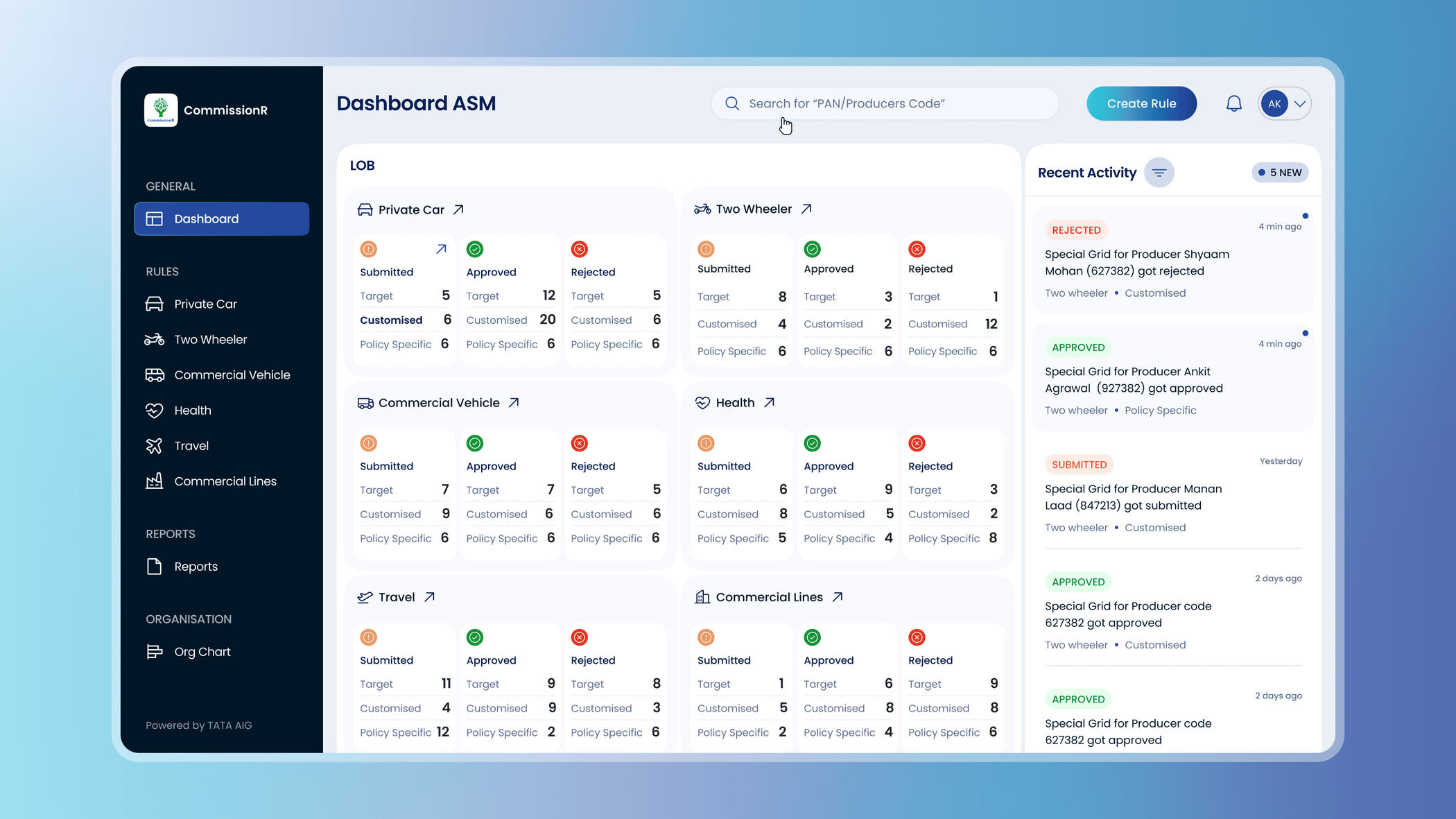
CommissionR gives sales and operational teams a centralised workspace for managing commission structures across different insurance business segments. Users can create and clone commission rules, manage configurations, send changes for approval and track activity from one system.
The Challenge
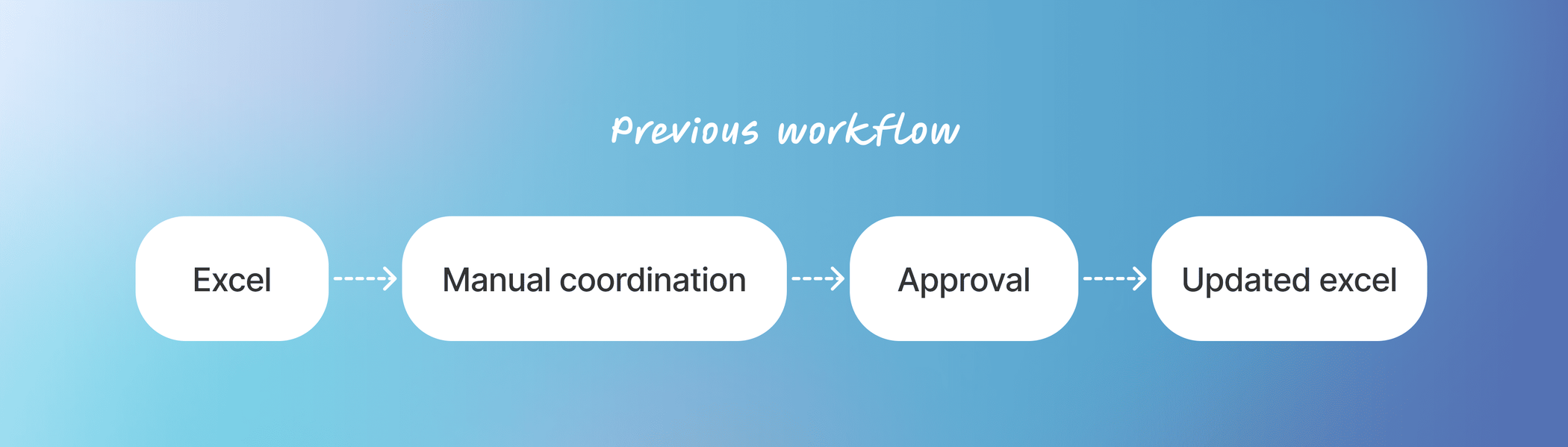
Commission structures were managed through Excel sheets, but those sheets were also acting as the system for configuration, collaboration and tracking. As the number of insurance products and commission structures increased, this became harder to manage.
Teams needed to:
- Create complex commission grids.
- Configure rules across different business segments.
- Coordinate approvals manually.
- Track changes between versions.
- Find existing configurations.
- Monitor what was approved or still pending.
The challenge was not simply moving Excel data into a web interface.
Discovery
I conducted discussions with stakeholders involved in commission management, including sales managers and operational teams.
I focused on understanding:
- How commission rules were created.
- Which information changed across business segments.
- Where repetitive work occurred.
- How approvals moved between teams.
- What happened when a rule changed.
- How users tracked the status of their requests.
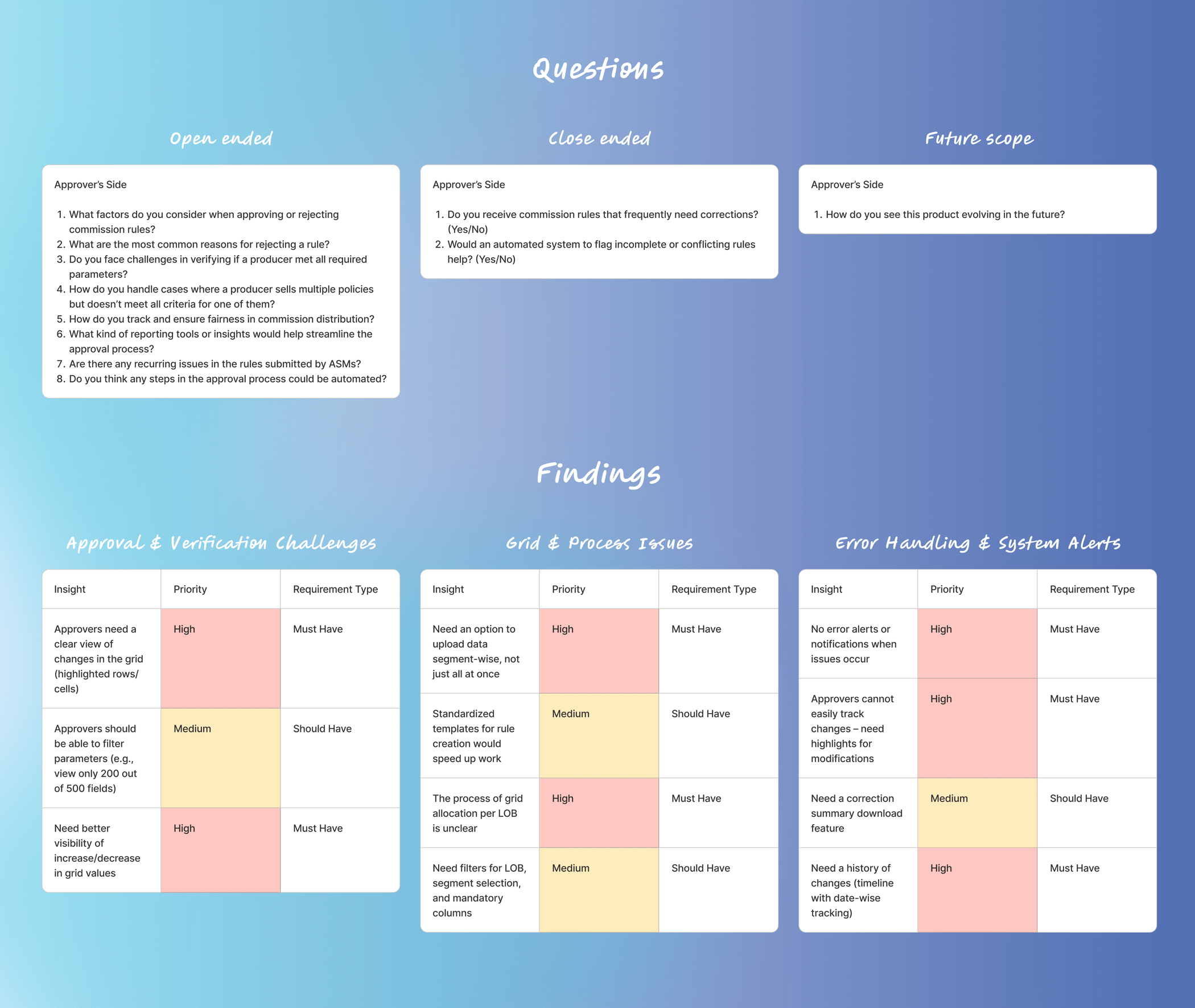
The research highlighted three recurring problems.
Too much repetitive configuration
Similar commission structures often required users to recreate information manually.
Approval status was difficult to follow
Manual coordination made it harder to understand who needed to act next.
Changes were difficult to trace
Users needed a reliable way to understand what changed and how a rule evolved over time.
Product Principles
Reduce repetitive work
If a rule already exists, users should be able to reuse its structure instead of rebuilding it from scratch.
Make status visible
Users should always know whether a rule is being created, waiting for approval, approved or updated.
Preserve traceability
Changes to commission structures should remain visible so users can understand how a rule evolved.
Designing the System
Before designing individual screens, I structured the platform around the major actions users needed to perform. Instead of organising the platform around spreadsheet files, I organised it around the lifecycle of a commission rule. This helped turn a document-based process into a task-based product experience.

The Core Workflow
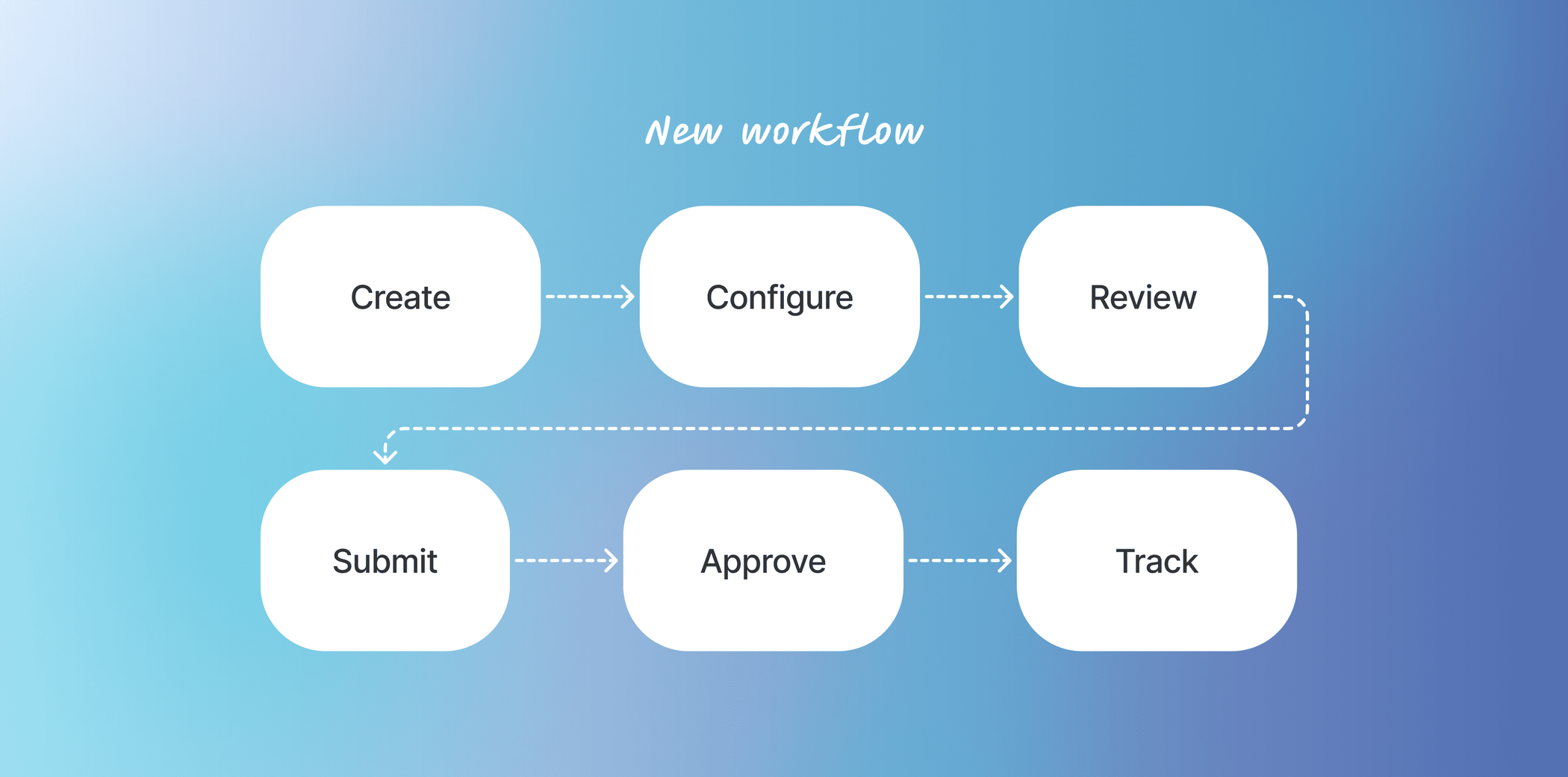
The most important experience in CommissionR was the rule lifecycle. A user needed to create a commission structure, configure its conditions, submit it to the appropriate approver and understand what happened next. I designed the workflow around clear stages:
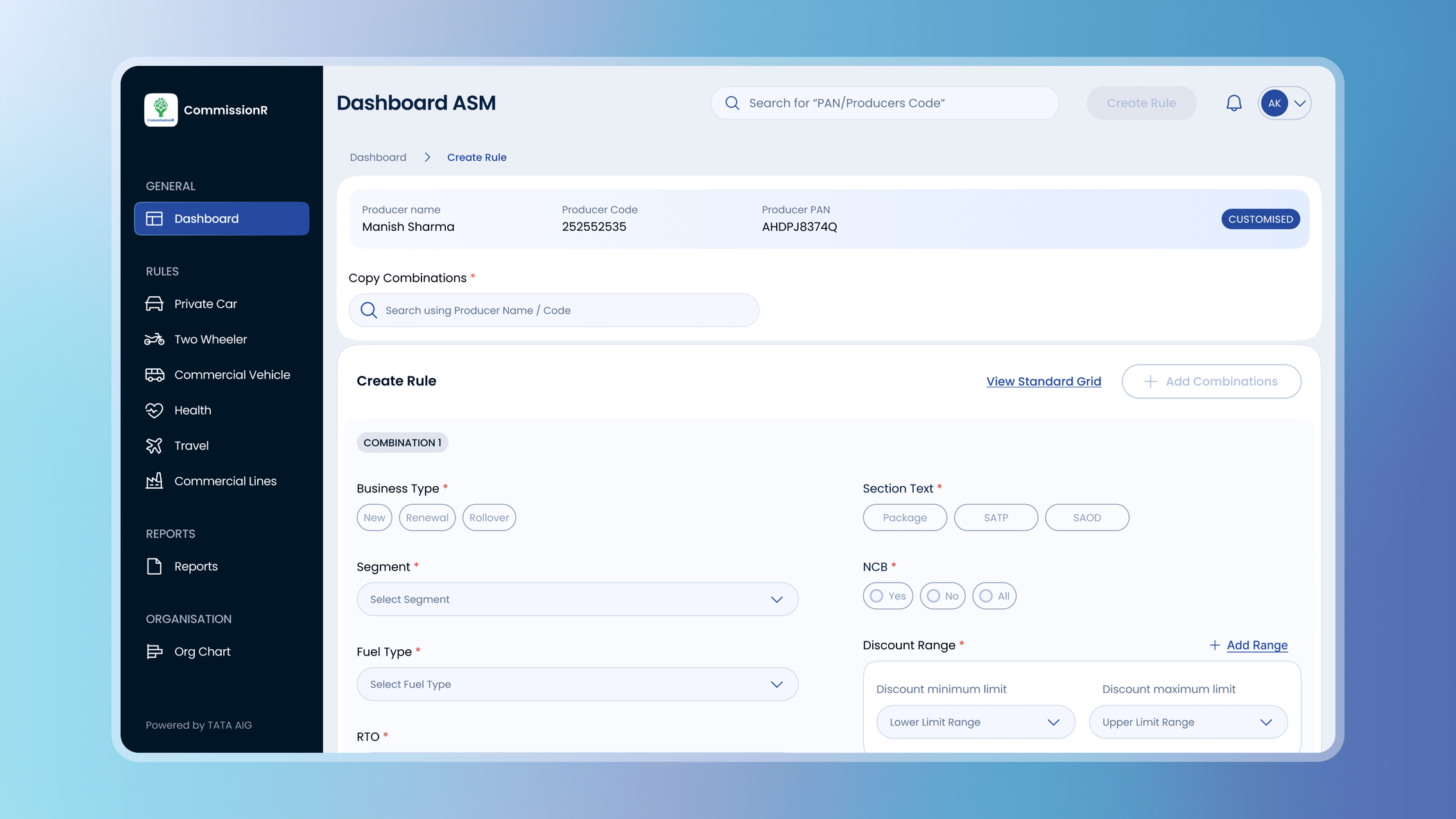
Simplifying Rule Creation
Creating commission structures repeatedly was one of the biggest opportunities to reduce manual effort. I introduced reusable rule creation patterns that allowed users to start with predefined structures instead of rebuilding common configurations every time.
Users could define the required parameters while the interface grouped related information into logical sections. This helped separate the underlying complexity of commission logic from the task of configuring it.
Designing Approvals
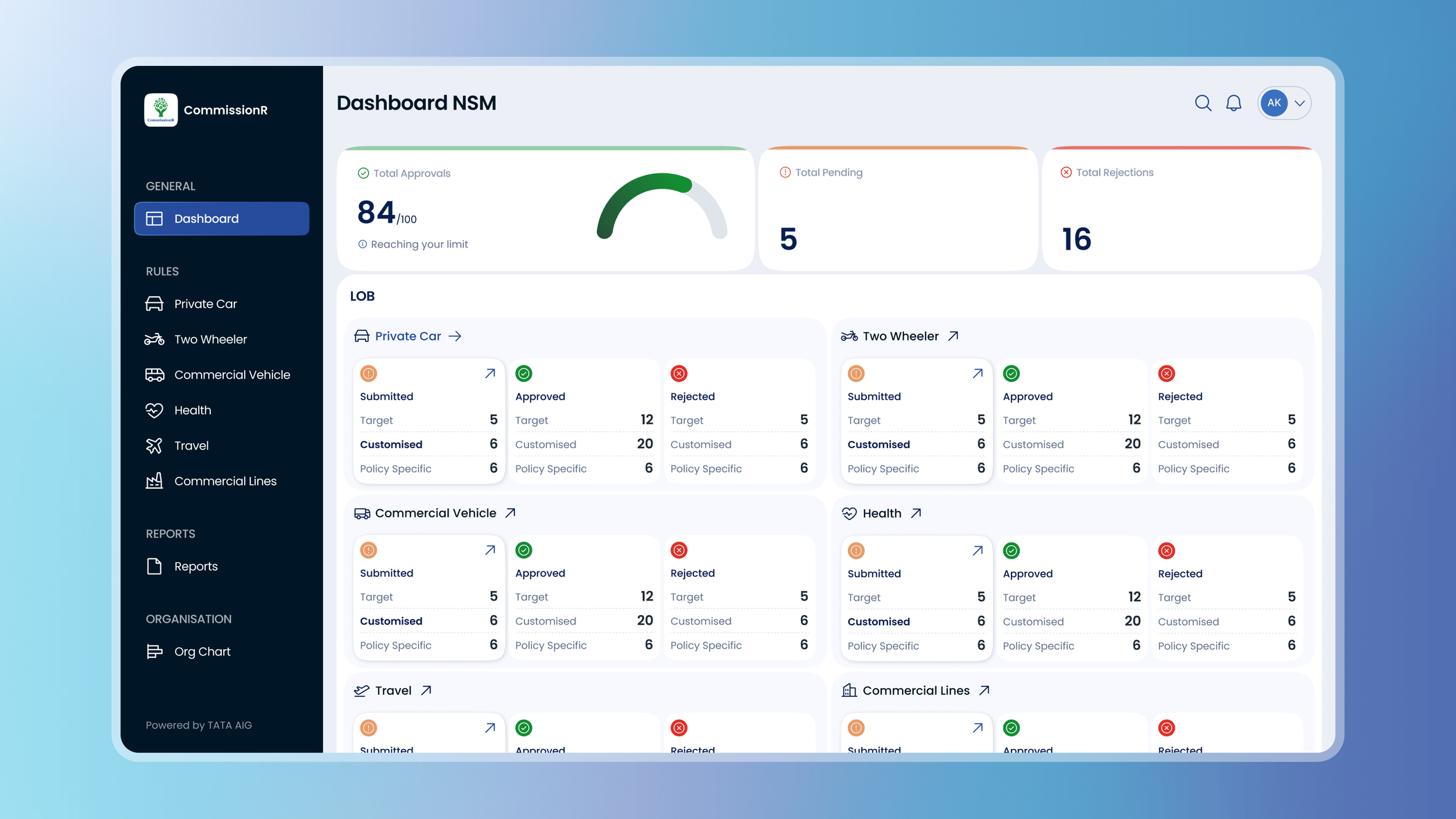
Approvals were previously dependent on manual coordination between teams. That created a simple UX question:
How can users immediately understand what is waiting for them?
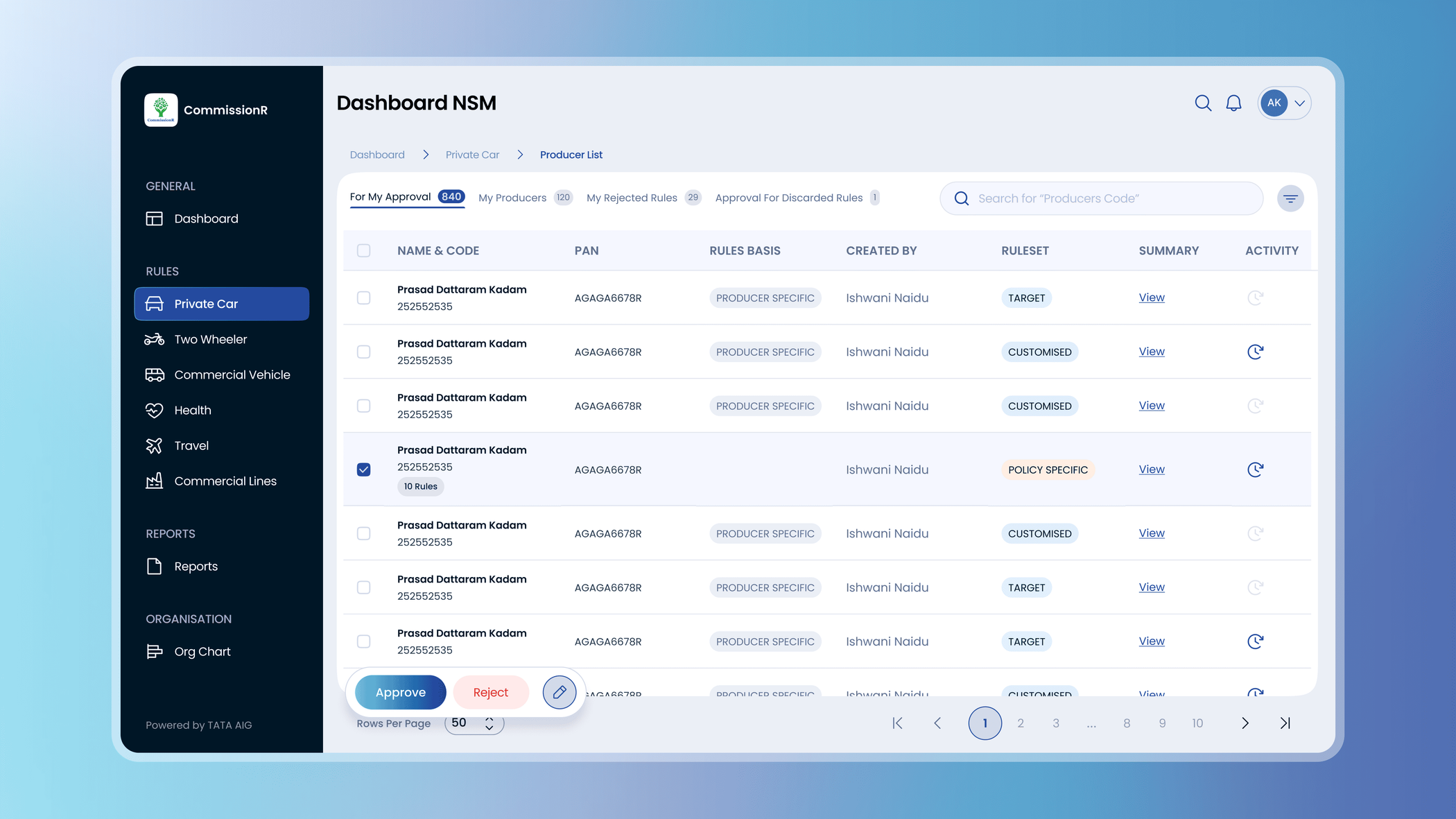
I designed a structured approval workflow where approvers could identify pending requests, review the relevant rule information and take action directly within the platform.
Designing for Trust
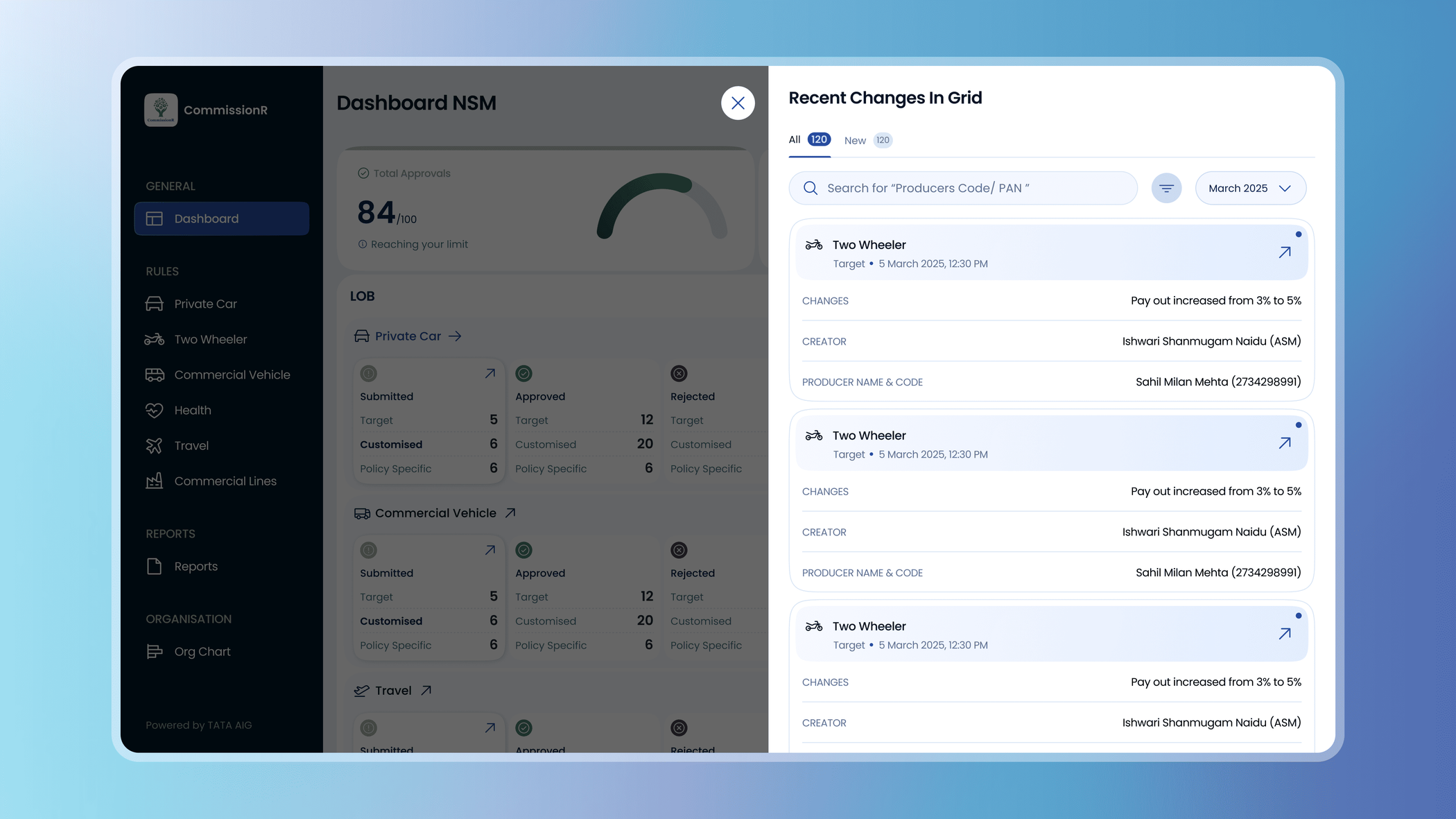
A commission rule cannot simply change without leaving a trail. Users needed to understand what changed, when it changed and where the rule currently stood in the approval process. I introduced change history and activity tracking to make updates visible over time.
Search and Navigation
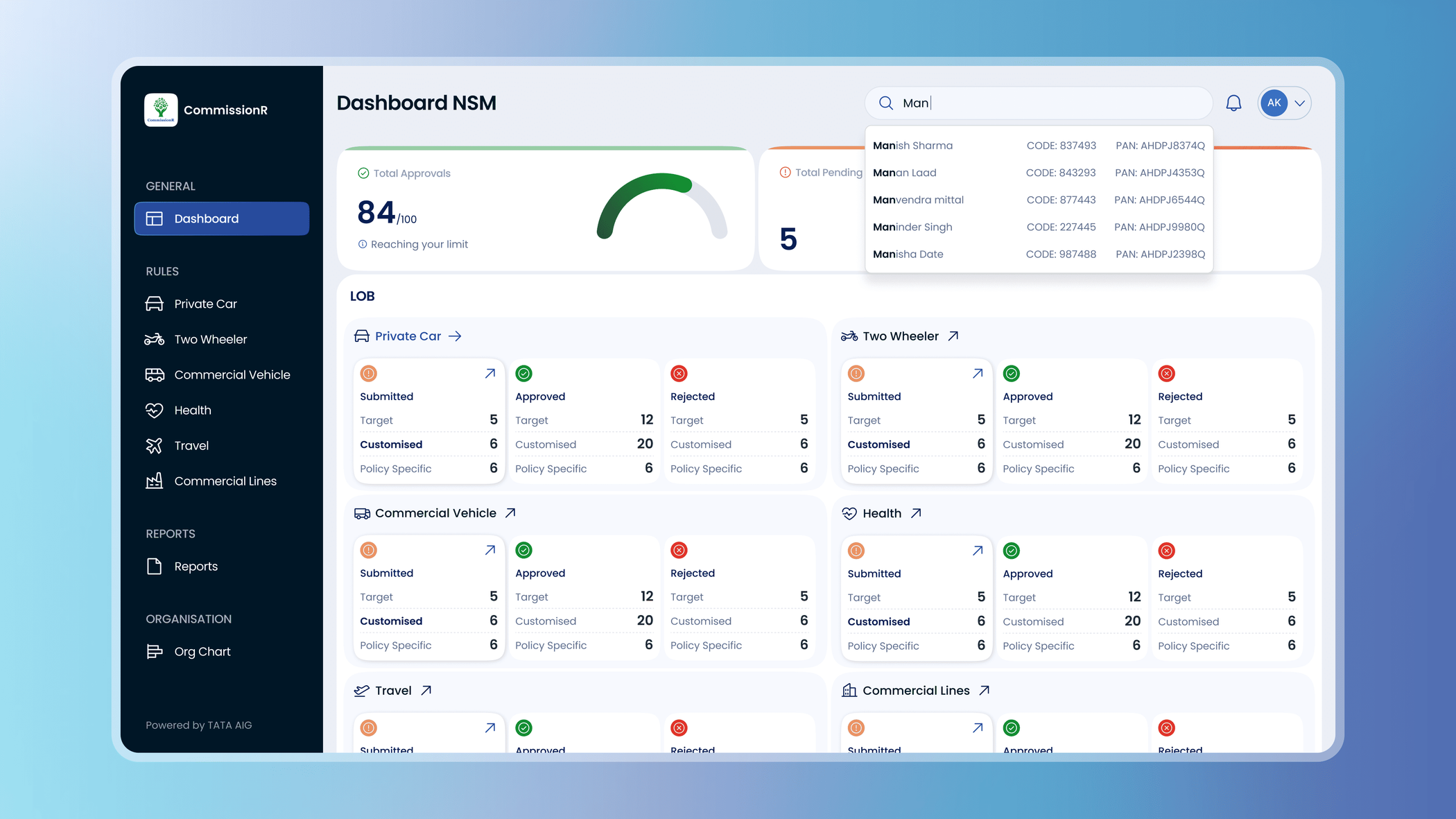
As commission configurations grew across business segments, finding the right information became increasingly important. I introduced global search, filtering and structured navigation to help users locate grids, producers and commission configurations more efficiently.
Designing the Interface
Commission management naturally involves tables, values, statuses and configuration details. The visual design needed to support large amounts of information without making the product feel overwhelming. I used a modular interface with clear grouping and hierarchy to separate important information into manageable sections.
The Result
CommissionR transformed commission management from a collection of spreadsheet-driven activities into one connected digital process. Users could create and reuse commission configurations, submit rules through structured approvals, monitor activity and track changes without depending on separate spreadsheet versions for each part of the workflow.
Outcomes
One centralized workflow
I brought rule creation, configuration, approval and tracking into one connected system instead of treating each step as a separate spreadsheet activity.
Less repetitive configuration
Reusable templates and rule cloning allowed existing commission structures to become starting points for new configurations.
Clearer approval visibility
Structured statuses and notifications made it easier to understand where a commission rule stood and which action was required next.
Greater traceability
Change history and activity tracking provided context around rule updates without relying on manual spreadsheet comparisons.
Easier access to information
Search, filters and centralized dashboards helped users navigate commission configurations across multiple business segments.
A scalable interface system
Reusable components and interaction patterns created a consistent foundation for handling different rule types and future commission workflows.
What This Project Taught Me
Digitizing a spreadsheet means understanding why the spreadsheet works
The biggest lesson from CommissionR was that moving spreadsheet fields into forms would not solve the underlying problem. I first needed to understand how users had adapted Excel to support their workflows, dependencies and approvals before deciding what the digital experience should become.
Enterprise UX is often about making logic visible
Complexity was unavoidable in commission configuration. Instead of trying to remove every layer of complexity, I focused on helping users understand relationships, statuses and the consequences of their actions.
Reuse can be more valuable than automation
One of the simplest ideas in the product was allowing existing rules to become starting points for new ones. The project reinforced that improving efficiency does not always require automating an entire workflow. Sometimes it means removing the repetitive parts that should never have been repeated in the first place.
Traceability builds trust
When information affects commissions, users need confidence in how and why something changed. Designing history, statuses and approvals showed me how visibility itself can become an important part of the user experience.