Bringing quick-commerce speed to B2B seed ordering
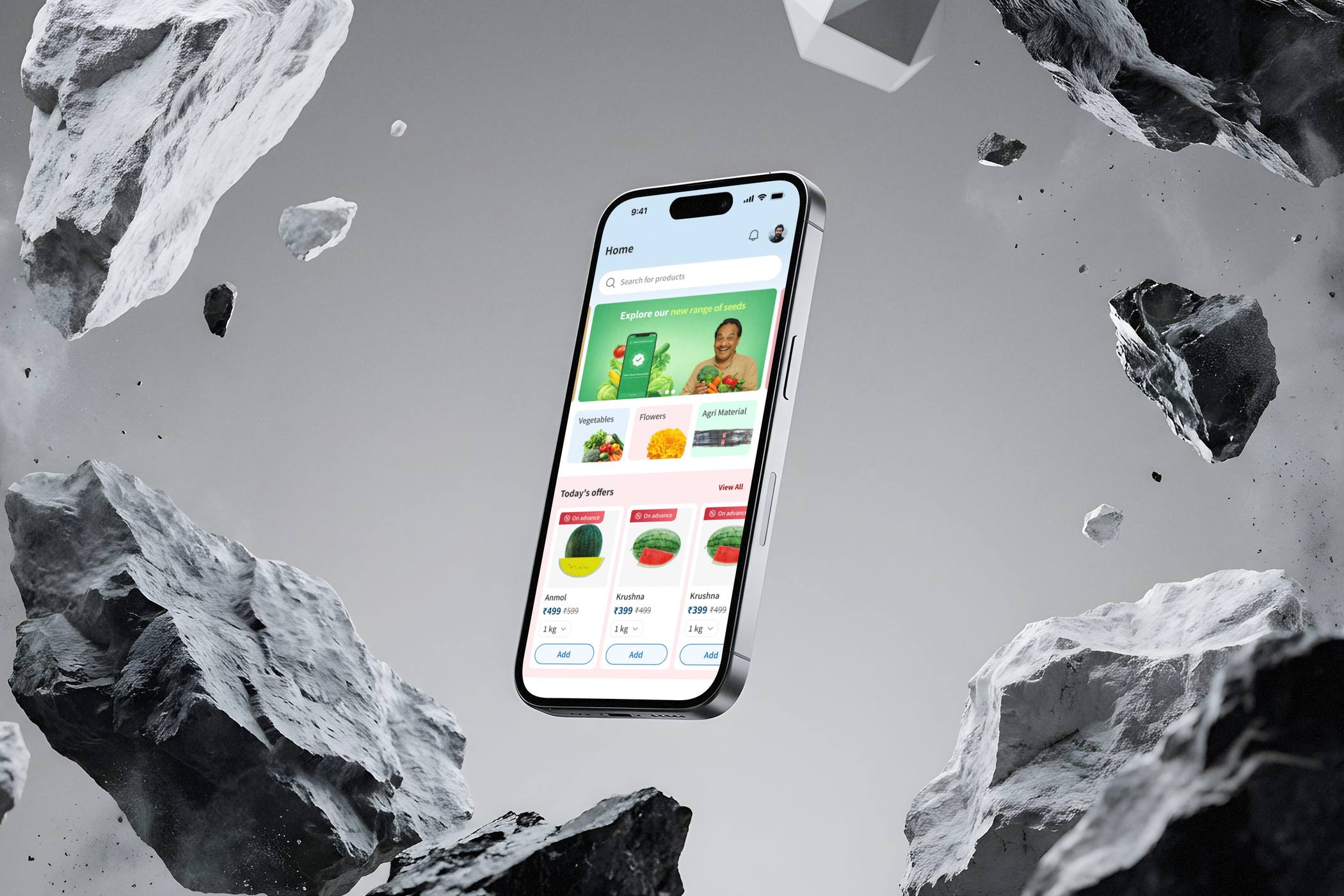
Ordering seeds should have been a straightforward task for dealers, but the existing experience turned it into a long and confusing process. Dealers had to work through an unclear information structure, unfamiliar interactions, and disconnected payment flows. Internal teams faced similar problems when approving orders, verifying payments, and managing dealer activity. I redesigned the product as a connected ordering and payments platform. The dealer experience uses familiar quick-commerce patterns, while dedicated dashboards give branch and head office teams a clearer view of operations.
My Role
Lead Product Designer
I was the design owner across the dealer app and internal operations dashboards. I interviewed dealers and internal teams, mapped the existing workflows, and redesigned the experience around a straightforward principle, make frequent tasks fast.
By the Numbers
2 Connected Experiences
7 Core Dealer Workflows
At a Glance
The platform supports both sides of the seed distribution network. Dealers can browse seeds, place orders, track deliveries, submit payments and raise issues from one application. Branch and head office teams can review orders, verify payments, resolve tickets and monitor dealer and business performance through dedicated dashboards.
The Challenge
The existing application had grown without a clear UX foundation. Ordering seeds involved multiple steps that did not reflect how dealers naturally expected a commerce application to work. The problems went beyond visual design.
The mental model was broken
The buying flow did not match familiar shopping behaviours, forcing dealers to learn how the system worked instead of letting the system work the way they expected.
Ordering required too many steps
A task that should have been quick had become a long, multi-step process.
Payments lacked clarity
Dealers had difficulty understanding how to submit payments and track previous transactions.
Internal operations inherited the same complexity
Order approvals, payment verification and dealer management were also difficult to manage because the underlying workflows were fragmented.
Discovery
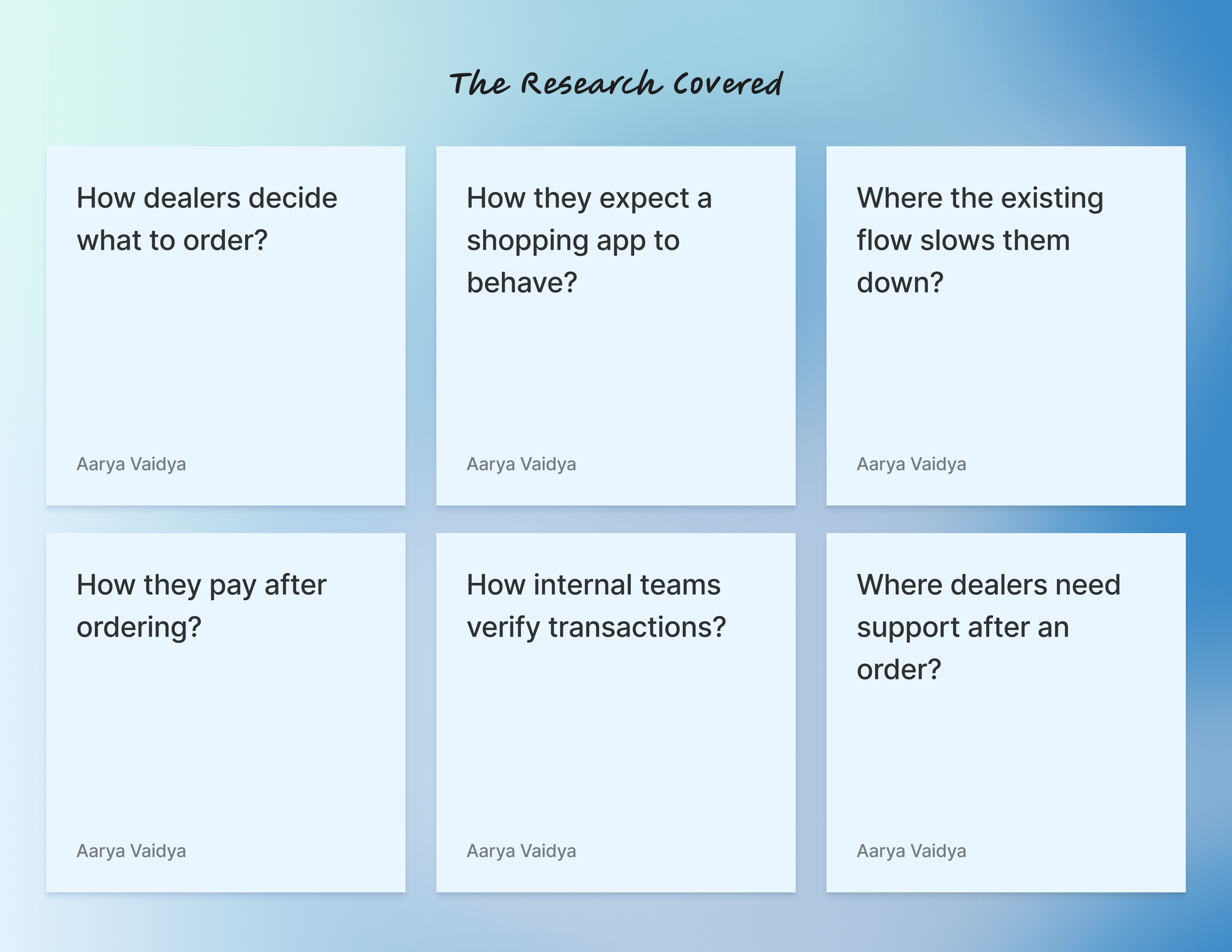
There was no existing user research explaining the product's structure. I interviewed dealers and internal operations teams to understand how ordering, payment, and verification worked both inside and outside the interface.
Prioritisation
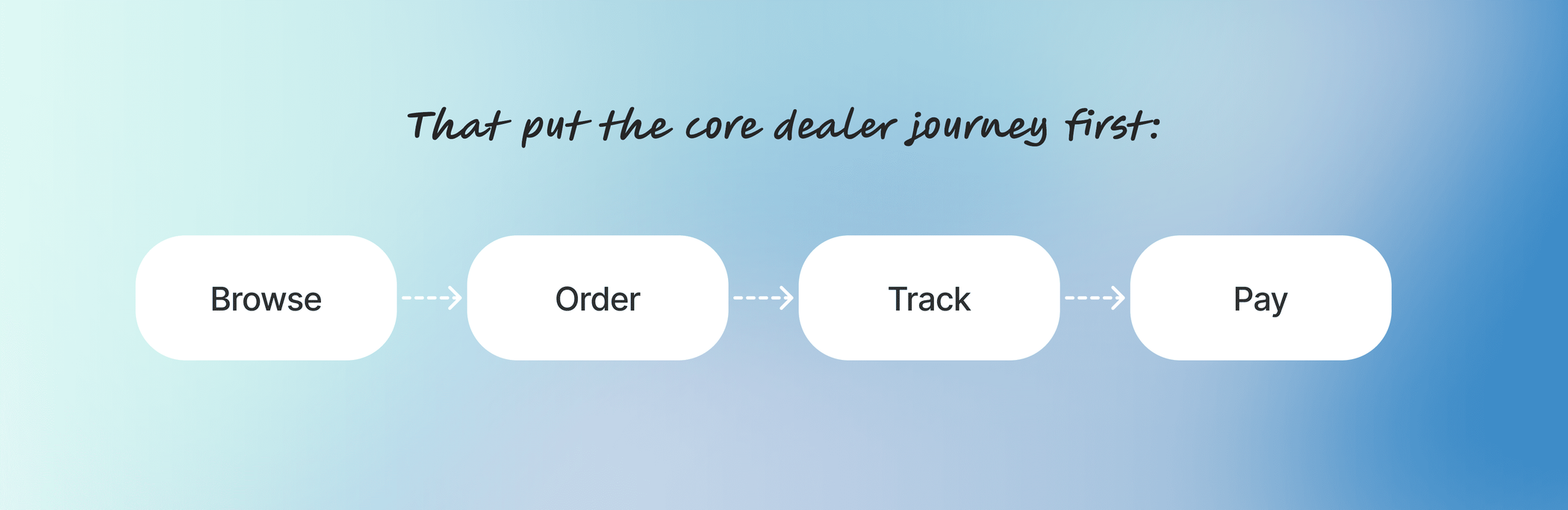
Ordering, payments, verification, and support all needed attention, but redesigning them at once would have spread the work too thin. I prioritized each area by how often the task occurred and how much operational friction it caused.
Product Principles
Keep frequent actions quick
Dealers should be able to complete routine tasks with little effort.
Use familiar patterns
When a common commerce pattern already worked, I used it instead of introducing new behaviour.
Make progress visible
Dealers and internal teams should be able to see what has happened, what is in progress, and what they need to do next.
Designing the system
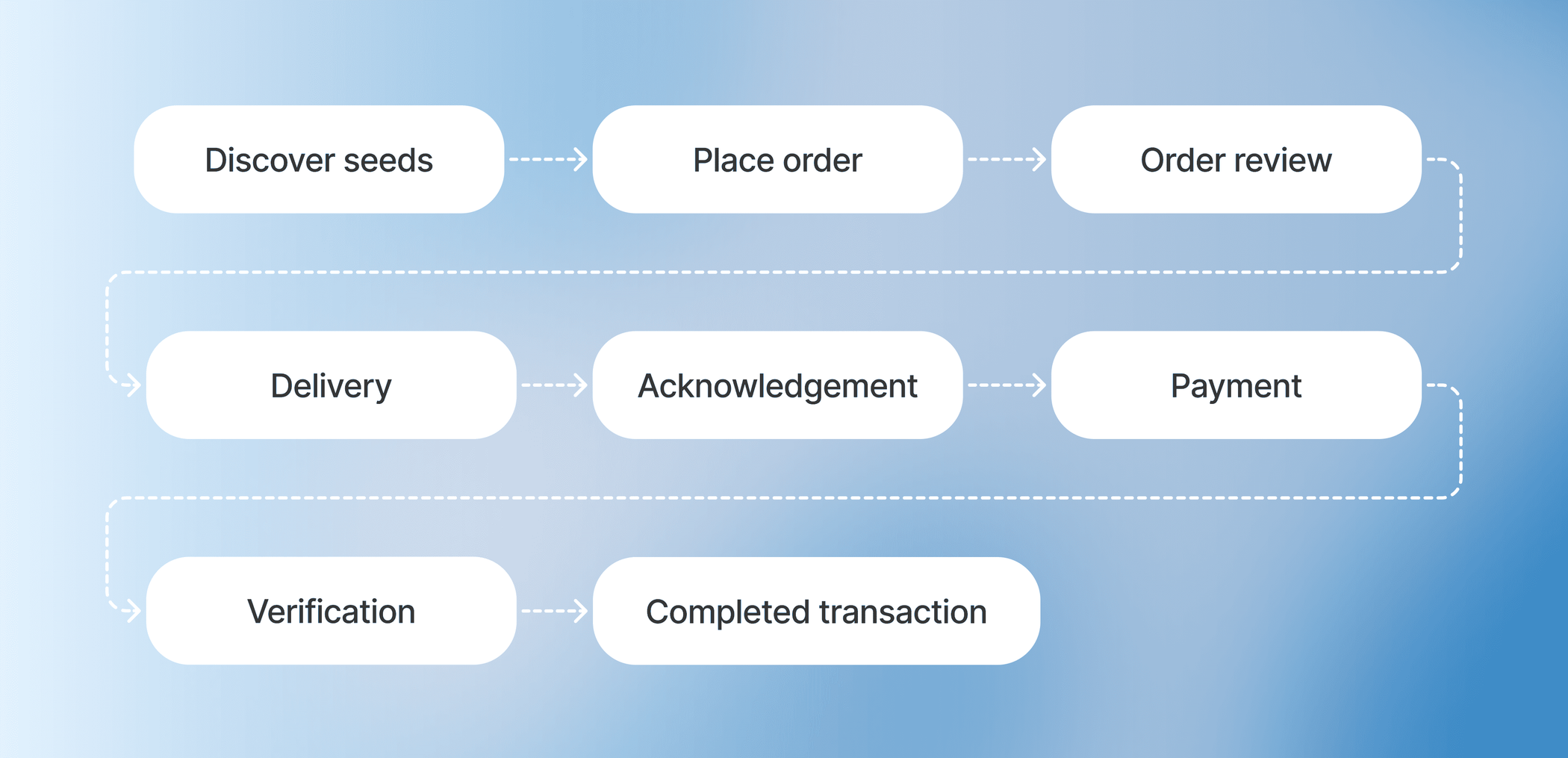
An order involves more than the dealer who places it. Branch teams, delivery partners, and payment verification teams all take part at different stages. I mapped the product around that full lifecycle instead of treating ordering, payments, and operations as separate features.
Ordering and product discovery
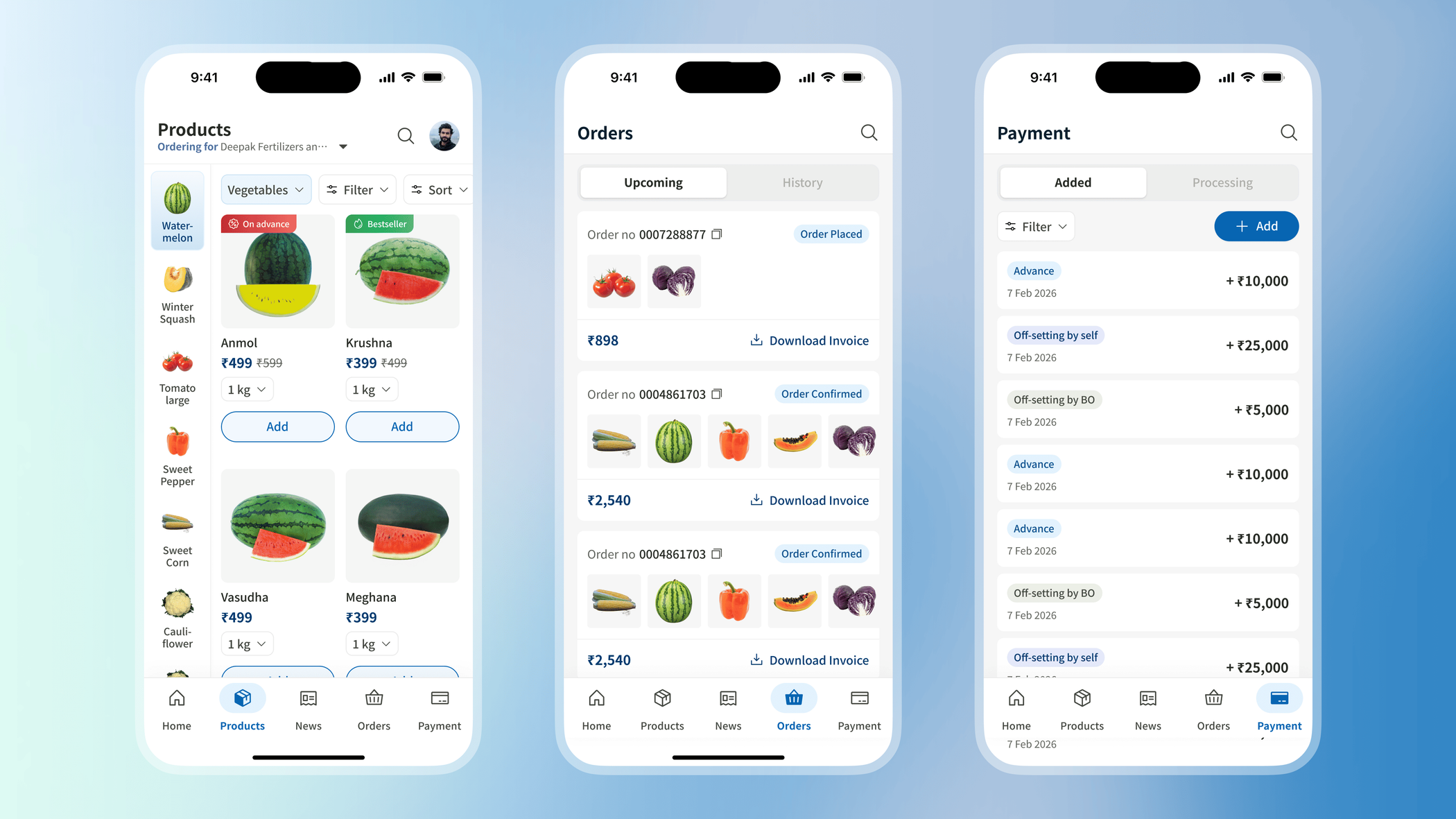
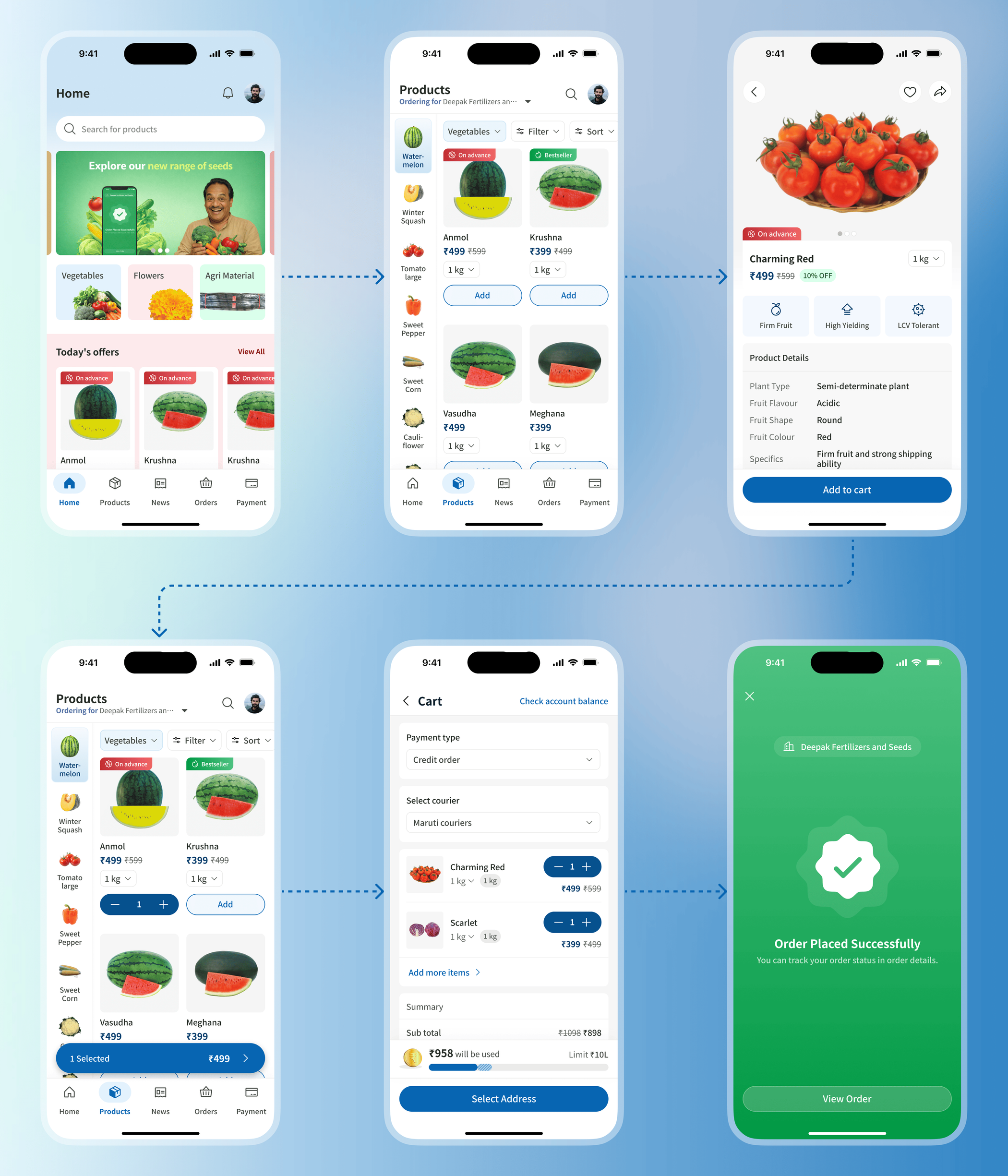
Dealers already use quick-commerce and e-commerce apps. I carried familiar parts of those experiences into seed ordering rather than creating a new interaction model. The redesigned journey includes clear seed categories, simpler product discovery, quick add-to-cart actions, easy access to the cart, and a focused checkout.
The catalogue lets dealers browse according to what they need without moving through several levels first. After adding an item, they can keep shopping or go straight to the cart.
Order Tracking
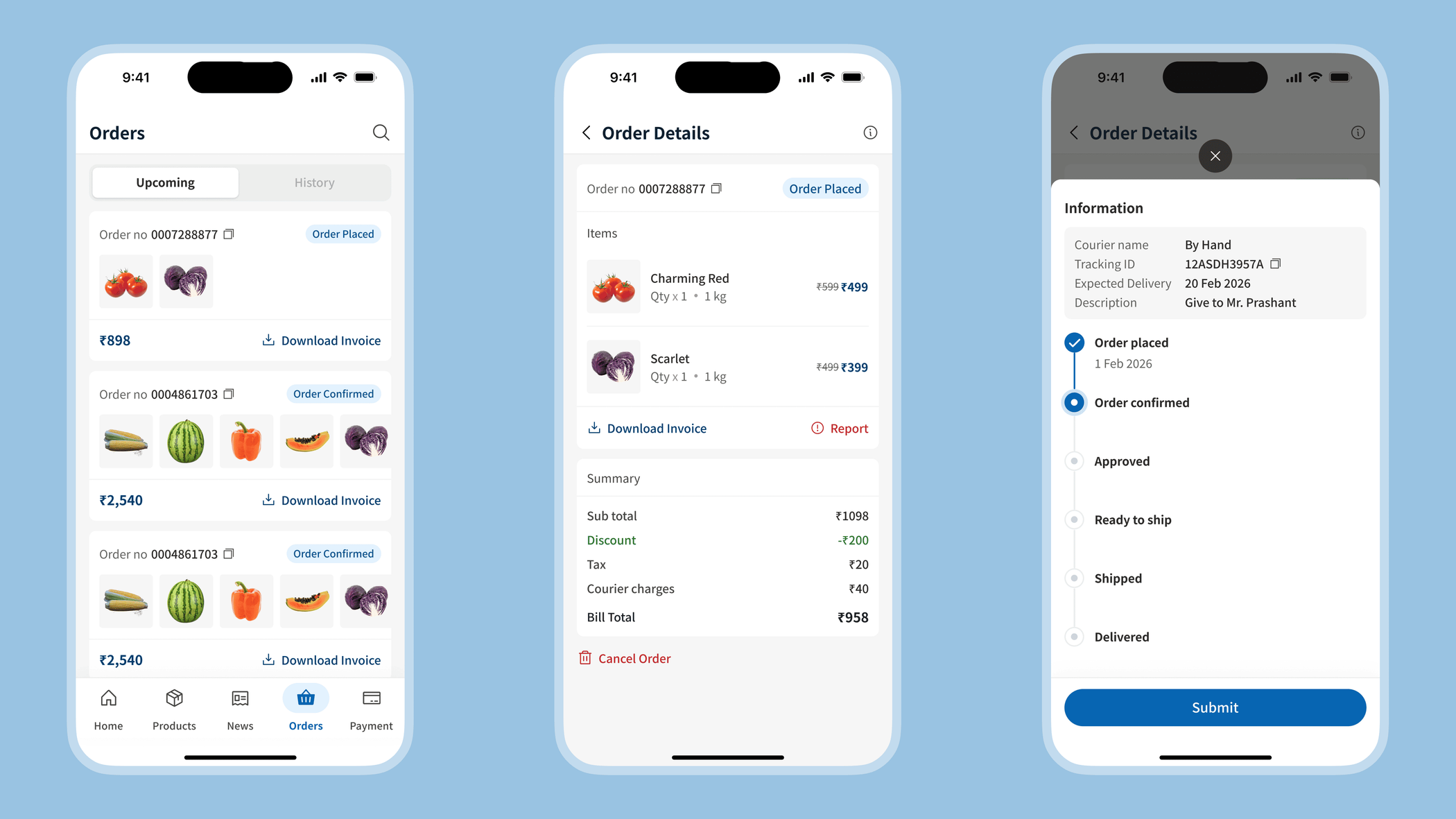
Dealers also need to know what happens after they place an order, without having to follow up manually.
From the order area, dealers can:
- Track current deliveries and see the current stage
- View delivery partner information
- Review previous orders and download invoices
- Acknowledge completed deliveries
- Raise an issue against an order
The order screen is therefore useful throughout the transaction, not only as a record of past purchases.
Payment
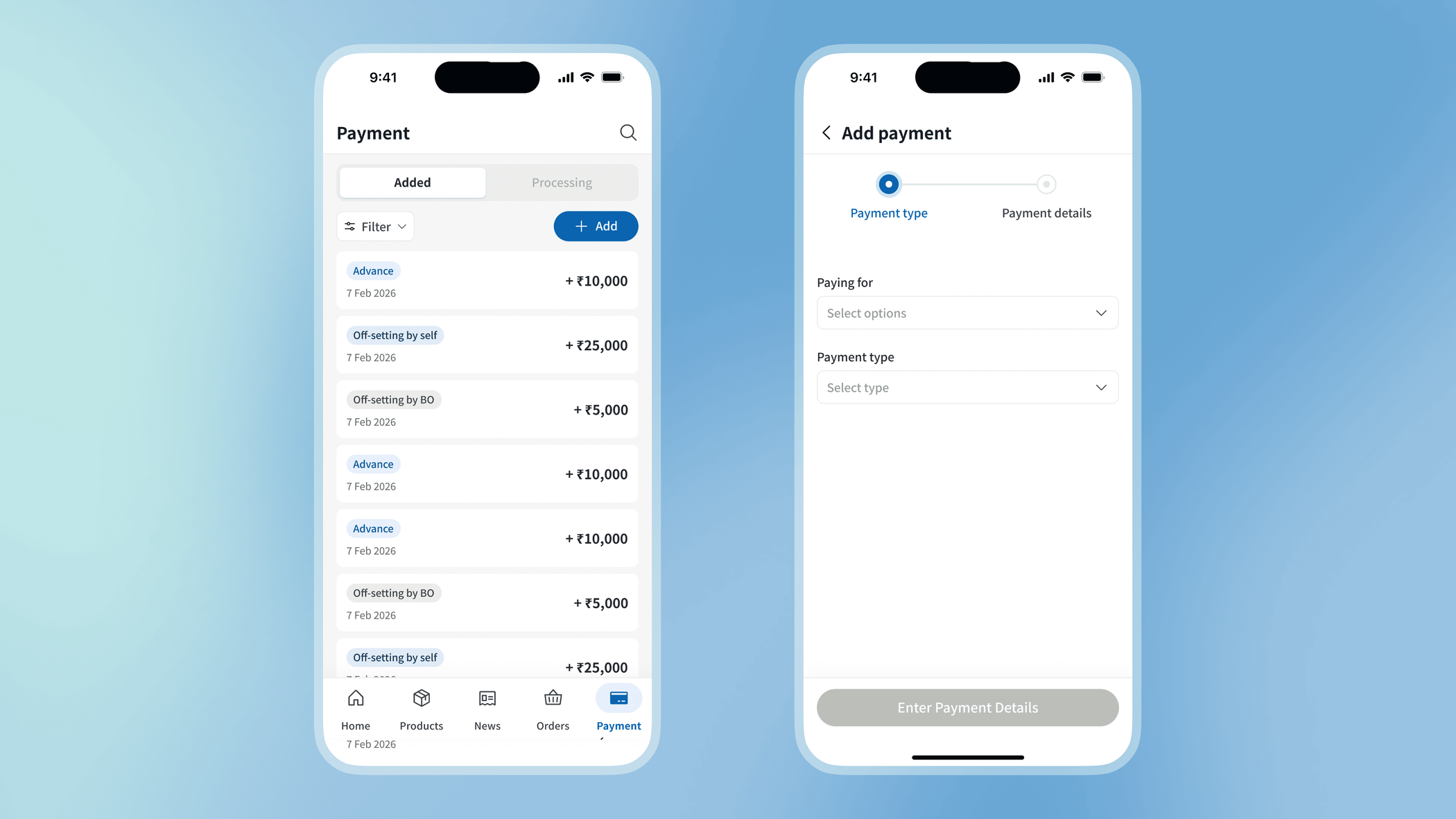
The dealer payment model differs from a consumer checkout. Dealers can place an order first and pay later through their bank account, so I designed the flow around that existing process.
Dealers also need to know that a payment was recorded and be able to find it later. The payment history shows previous transactions and their current status, making payments a traceable part of the dealer's account rather than a one-time form submission.
Support
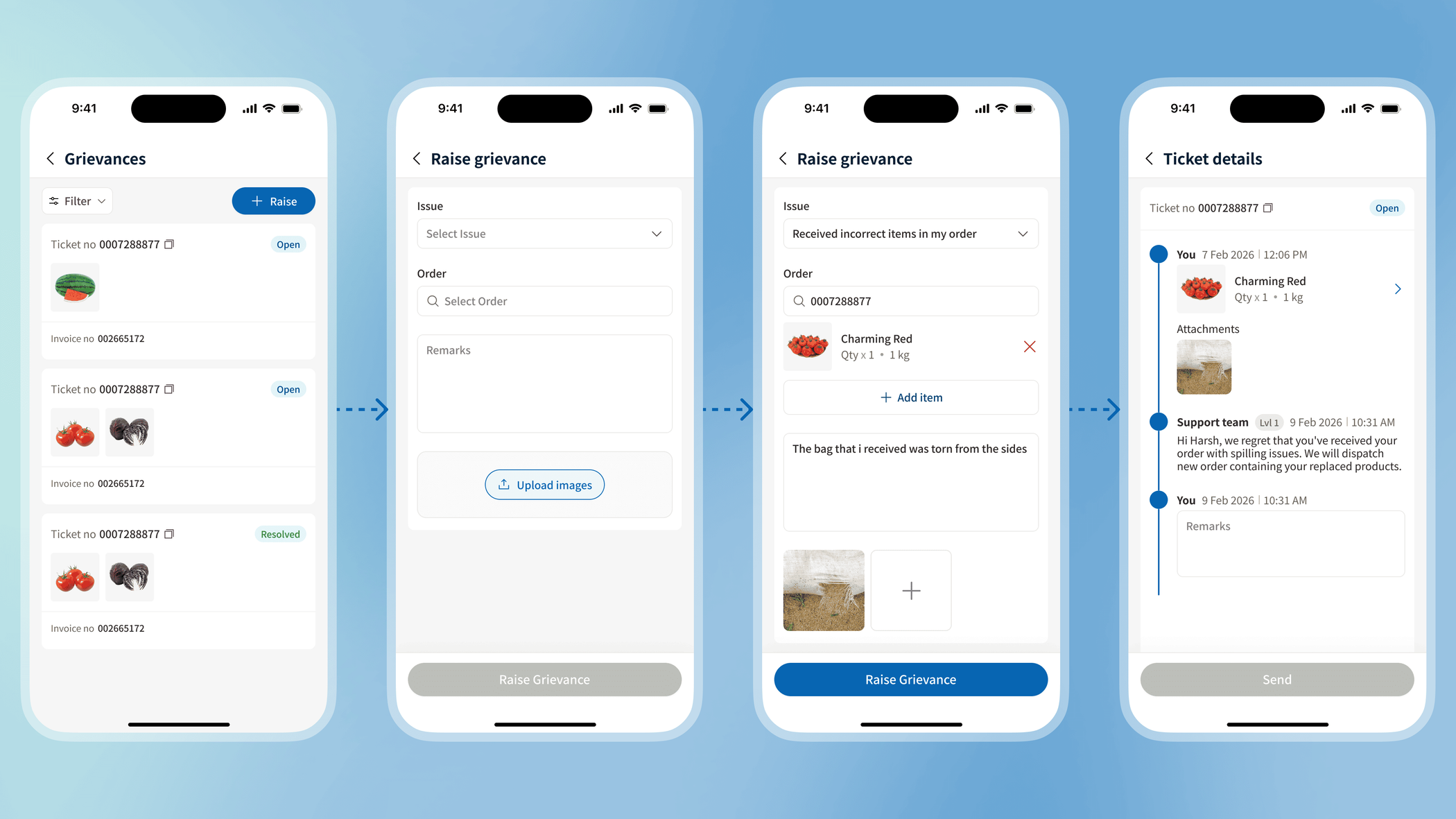
I designed a guided ticket flow that gives dealers a clear way to report delivery or transaction problems and gives operations teams the context they need. Dealers can select an issue type, connect it to an order, describe the problem, add supporting information, and track its progress.
After submission, a representative can contact the dealer through the platform. A timeline follows the ticket from creation to resolution, keeping the problem, conversation, and outcome tied to the original transaction.
Updates
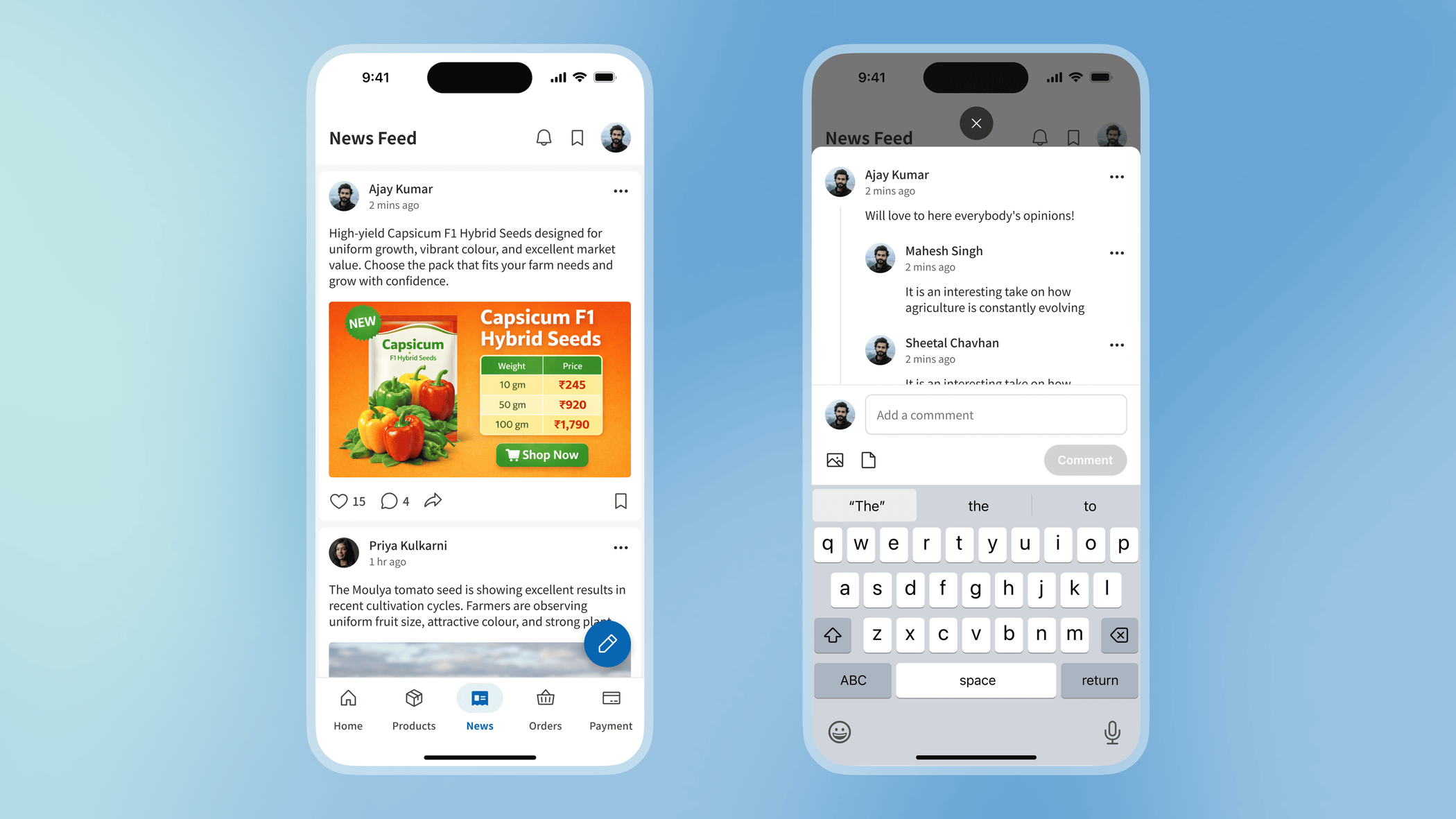
The updates feed gives Known-You Seed a dedicated place to share price alerts, relevant news, and other information with dealers. Dealers can also participate through posts, comments, and other interactions.
Operations Dashboards
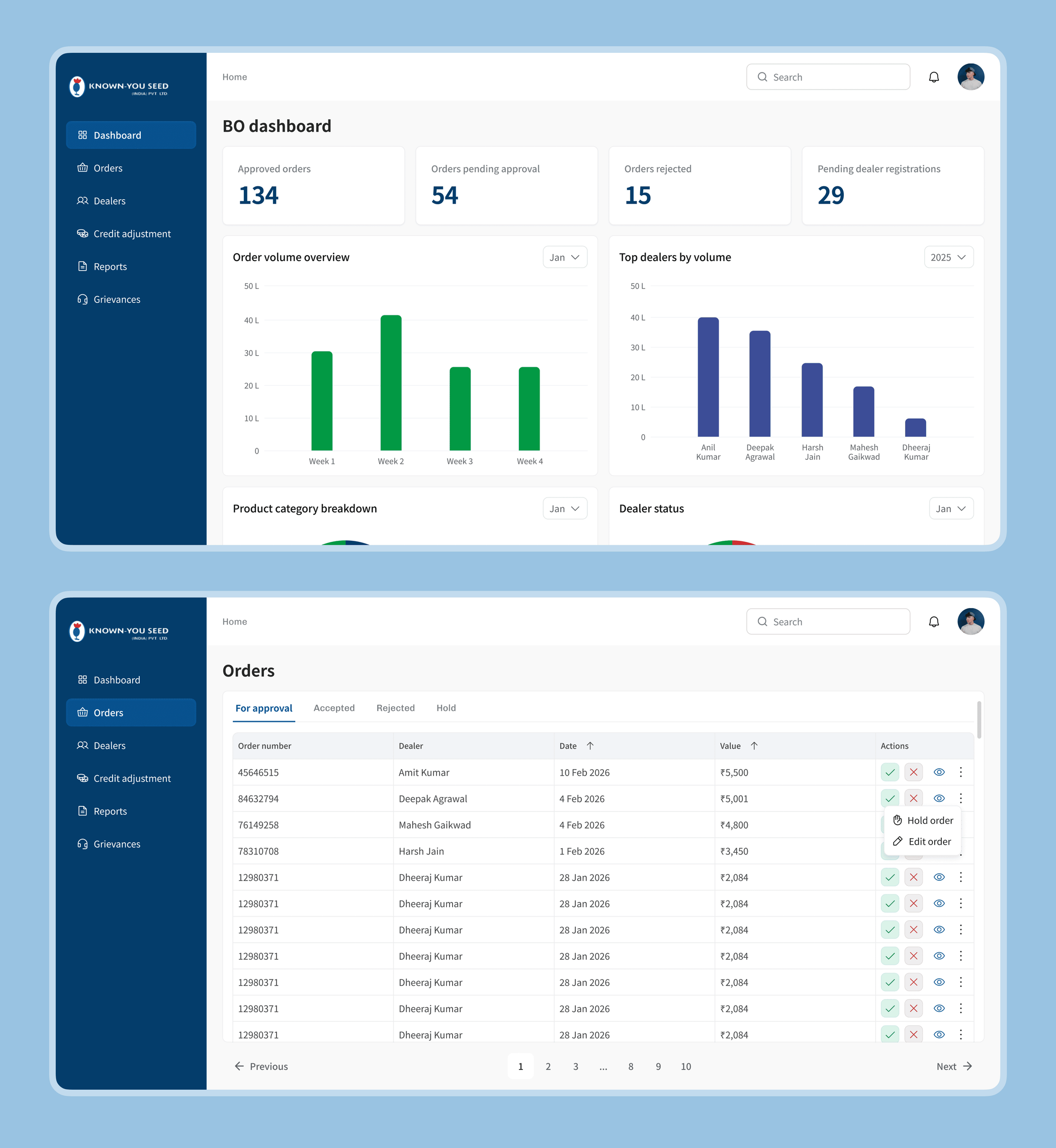
Every order, payment, and ticket creates work for internal teams. I designed separate dashboards for branch and head office users so they could manage that work within the same product ecosystem.
Connecting payment submission and verification
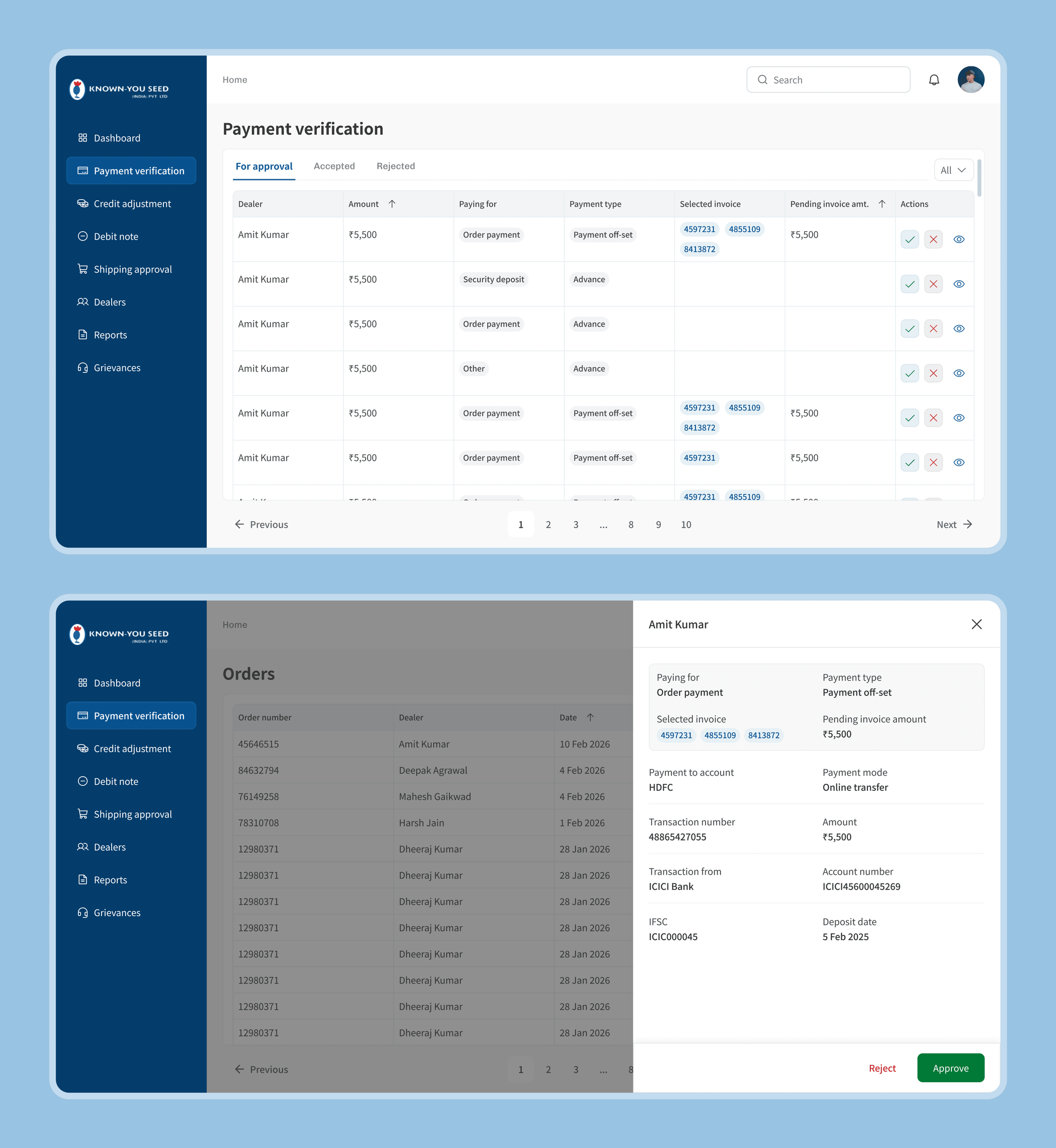
When a dealer submits a payment, internal teams need enough information to verify it confidently.
Business Performance
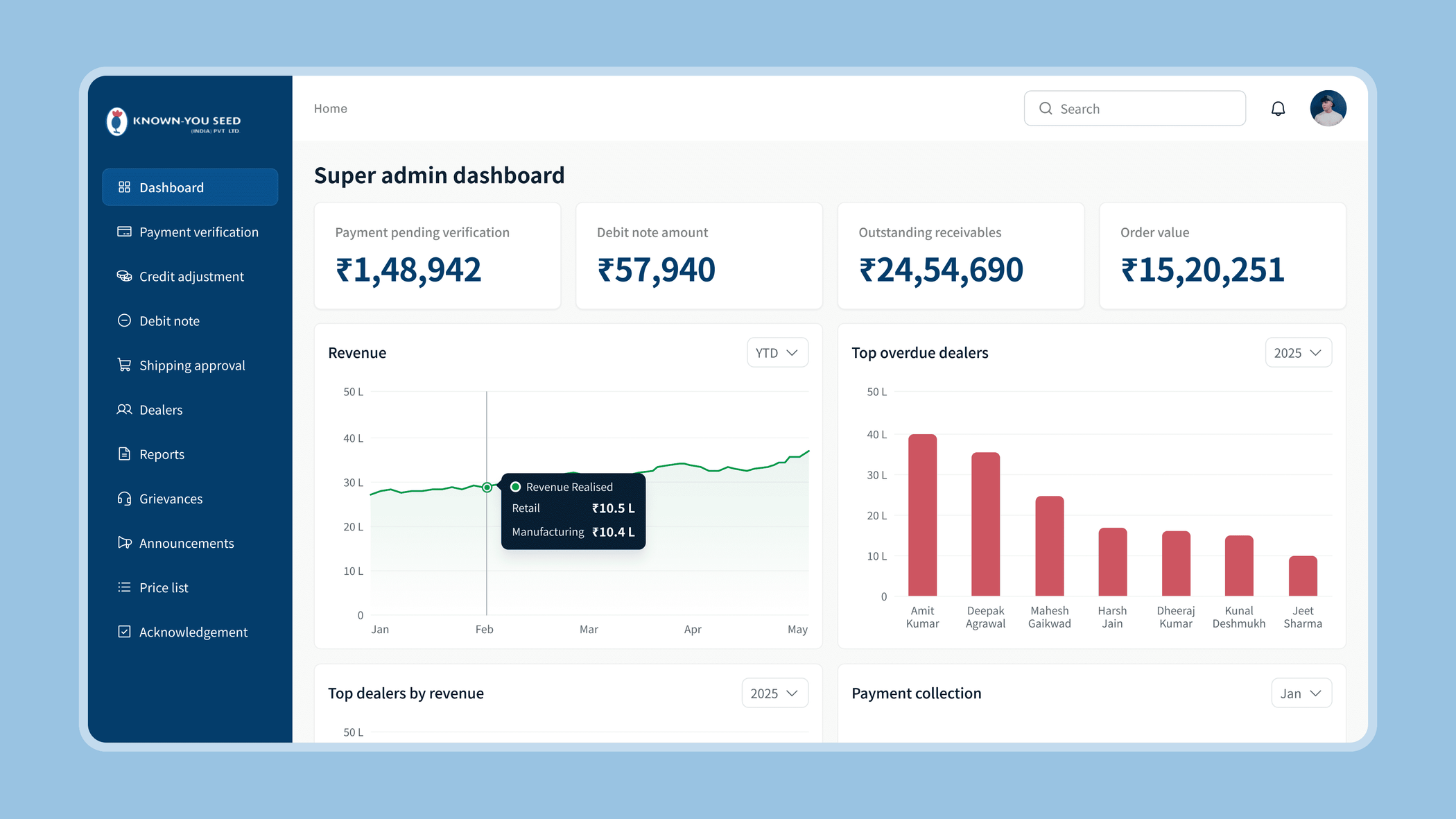
Head office users need a broader view than individual orders and transactions. Their dashboard surfaces dealer metrics, seed-wise performance, revenue insights, branch-level performance, order activity, and payment activity. Leadership can use this overview while operational teams remain focused on daily actions.
The Result
The redesigned platform brings ordering, tracking, payments, support, and internal operations together. Dealers get a faster buying experience based on familiar commerce patterns. Branch teams have structured workflows for reviewing orders, verifying payments, and resolving issues. Head office teams can monitor dealer activity and business performance.
Outcomes
Faster, more familiar ordering
I redesigned the buying journey around interaction patterns dealers already understood, reducing unnecessary complexity between discovering seeds and placing an order.
Complete order visibility
I connected order tracking, delivery information, invoices, acknowledgements and support to give dealers a clearer view of the complete order lifecycle.
Clearer payment management
I structured post-order payments and transaction history so dealers could submit and reference payments through one consistent experience.
Guided support
I connected ticket creation, order context, communication and status tracking into one flow so issues could be followed from creation through resolution.
Centralized operational control
I designed branch and head office dashboards that brought order review, payment verification, ticket resolution and dealer management into one place.
Better business visibility
I surfaced dealer, seed, revenue and branch-level performance through dashboards designed to support both operational and higher-level decision making.
What this Project Taught Me
Mental models matter more than product categories
Dealers already knew how modern commerce applications worked. Using those existing mental models allowed me to simplify the product without requiring users to learn a new system.
Speed can be a design principle
Speed was not only about reducing loading time or clicks. It meant questioning every interaction and making sure each step helped users complete the task.
Simplifying one side can expose complexity on the other
Making ordering easier for dealers increased the importance of designing strong operational workflows behind it. The project reinforced that customer experience and internal operations need to be designed together.
Prioritization is part of product design
There were more problems than I could solve at once. Choosing to focus first on the workflows with the highest frequency and operational impact helped me make stronger decisions instead of spreading attention equally across every feature.